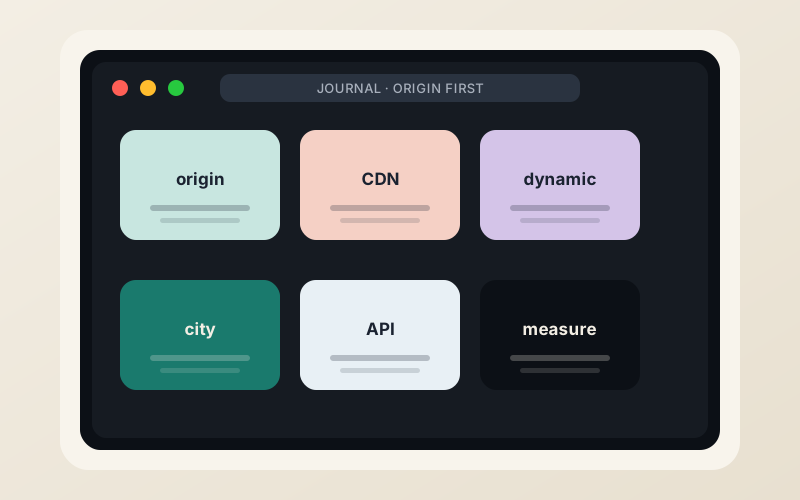
CDNs are excellent for static assets and cacheable pages. They are less magical for personalized or highly dynamic responses that must come from the origin on every request. In those cases the physical location of the origin still dominates latency.
When the origin matters most
- Logged-in experiences, shopping carts, and dashboards.
- APIs that cannot be cached at the edge.
- Applications that talk to a database or internal service in a specific region.
- Compliance requirements that keep data in one jurisdiction.
Putting the origin in the same region as the majority of users (or as the dependent services) often yields a larger improvement than adding another CDN layer on top of a distant origin.
How we advise customers
Measure TTFB from the cities where real users are. If the number is high and the page is dynamic, consider moving the VPS or the application closer before spending more on edge configuration. Use the CDN for the parts of the site that can actually be cached. Keep the origin honest about its location.
LogicWeb’s six-city VPS map exists partly for this reason: so that origin placement is a choice rather than an accident.
Balance
Most sites benefit from both a well-placed origin and a CDN. The mistake is assuming the CDN can fix a poorly placed origin for every type of request. It cannot.
Written at the desk
ChadBe the first to weigh in.