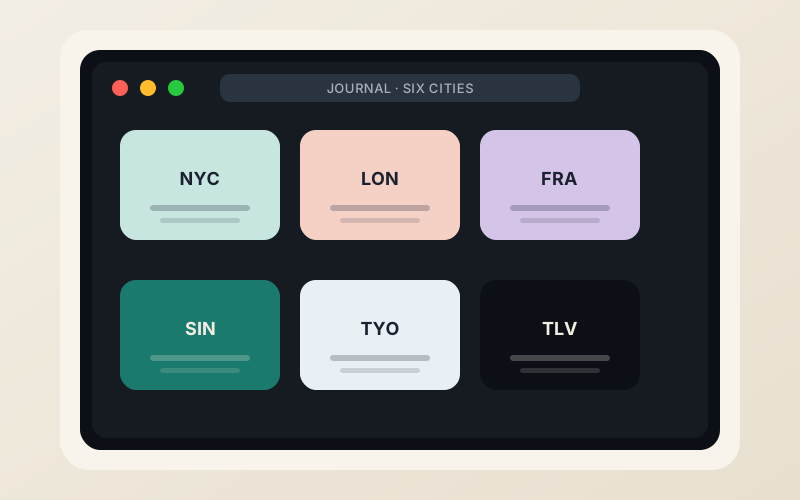
LogicWeb operates VPS in New York, London, Frankfurt, Singapore, Tokyo, and Tel Aviv. The useful question is not which city is “fastest” in the abstract. It is which city is fastest for a given audience.
Why city choice still dominates
Light travels fast but not infinitely fast. A user in Singapore hitting a New York origin will always pay a higher base latency than the same user hitting a Singapore origin, regardless of how fast the NVMe is. CDN and edge caching help for static assets; they do not eliminate the need for a sensible origin placement for dynamic or personalized content.
What we tell customers
- Put the primary application near the largest share of users or near the other services it talks to.
- Use a CDN for the static layer.
- Measure from the actual client locations, not only from a single synthetic probe.
- Re-evaluate if the audience shifts.
The six-city map exists so that the second and third steps have better options. A customer who only needs North American coverage can stay in New York. A customer with strong European and Asian traffic can split or choose the lower-latency primary.
The measurement habit
TTFB is only one number. It is a useful one because it captures the network and the server’s initial response before the rest of the page is considered. Consistent measurement from the same probes over time is more valuable than a single impressive screenshot.
The hosts that publish real multi-city options and encourage measurement tend to have customers who understand why their site feels fast or slow. The hosts that only sell “fast NVMe” leave the geography to chance.
Written at the desk
ChadBe the first to weigh in.