Boost your programming productivity with these proven AI commands and inputs for common coding requests. Whether you use ChatGPT, Grok (xAI), Claude, Gemini, or Cursor, these 50 top AI prompts will help you generate code faster, debug smarter, refactor like a pro, and more. Updated for 2026 AI models — complete with examples, sample AI outputs, and ready-to-use templates.
In 2026, AI coding assistants have become every developer’s superpower. Claude leads in complex reasoning, Grok excels at real-time insights, ChatGPT offers versatility, and tools like Cursor integrate prompts directly into your IDE. The secret? Mastering the right AI prompts (also called commands or inputs) for coding tasks.
This ultimate guide delivers the top 50 AI coding prompts organized by category. Copy-paste them into your favorite AI bot, customize with your code/context, and watch productivity soar. Includes real sample AI outputs, pro tips, and SEO-optimized resources for developers.
Why These AI Coding Prompts Work in 2026
- Specificity wins: Every prompt follows the proven structure: Role + Task + Constraints + Output Format.
- Model-agnostic: Works across ChatGPT, Grok, Claude 4, Gemini 2.5, and more.
- Time savings: Cut debugging time by 70%+ and generate boilerplate in seconds (backed by 2025-2026 benchmarks).
- Common coding requests covered: Generation, debugging, refactoring, testing, documentation, architecture.
Pro Tip: Always paste relevant code, specify language/framework (e.g., Python 3.12 + FastAPI), add “think step-by-step,” and request Mermaid diagrams or tests.
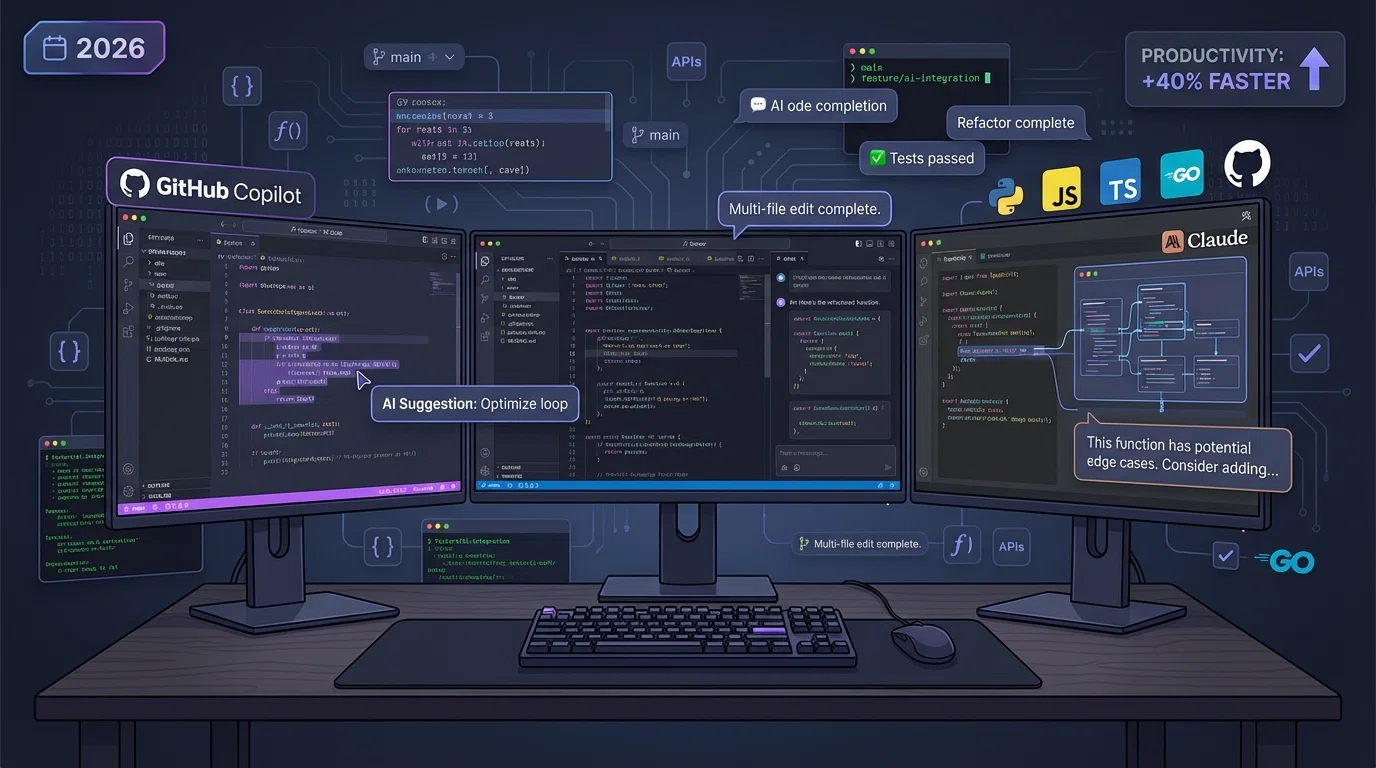
AI Tools for Developers: 20+ Best Coding Assistants (2026)
Pro Tips for Using AI Bots for Coding (SEO Bonus: Best Practices)
Before diving into the list:
- Assign a role: “You are a senior full-stack engineer with 15+ years experience.”
- Provide context: Error messages, requirements, style guides.
- Demand structured output: “Respond with markdown, code blocks, and explanations.”
- Iterate: Follow up with “Improve performance” or “Add tests.”
- Combine with tools: Paste into Cursor, Aider, or GitHub Copilot Chat.
Resources:
- Claude.ai – Best for complex coding (2026 SWE-bench leader)
- ChatGPT – Versatile all-rounder
- Grok by xAI – Real-time and fun explanations
Top 50 AI Coding Prompts: Categorized for Common Requests
1–10: Code Generation Prompts (Fastest Way to Build Features)
- “You are a senior [language] developer. Generate a complete production-ready function that [detailed task]. Include type hints, docstring, error handling, edge cases, and unit test stubs. Output only clean code in a markdown block plus a 3-bullet explanation.”
- “Create a full [framework] REST API endpoint for [feature, e.g., user registration] using [tech stack]. Include validation, JWT auth, logging, and database integration. Provide controller + service layers.”
- “Write a reusable React component for [UI element] with TypeScript, Tailwind, and accessibility. Include props, state management, and tests.”
- “Generate a complete Python CLI tool using Typer that [functionality]. Add help text, config file support, and rich output formatting.”
- “Build a SQL query (PostgreSQL) to [complex analysis] with proper joins, indexes suggestion, and CTEs. Explain performance.”
- “Create a full Docker + Docker Compose setup for a [app type] with [services]. Include .env example and health checks.”
- “Write a FastAPI endpoint with Pydantic v2 validation and async support for [task]. Return OpenAPI schema snippet.”
- “Generate a Next.js 15 server action for [feature] with form validation using Zod and error handling.”
- “Build a regex pattern in [language] to validate/extract [pattern]. Include 5 test cases.”
- “Create a data pipeline script using Pandas + Polars for [ETL task]. Optimize for speed and memory.”
11–20: Debugging & Troubleshooting Prompts (Fix Bugs in Minutes)
- “Act as a debugging expert. Here is the error: [paste error]. Code: [paste]. Expected behavior: [describe]. Step-by-step: root cause, why it happens, minimal fix with diff, and prevention tip.”
- “Analyze this stack trace in [language]: [paste]. Rank top 3 likely causes and provide the exact fix code.”
- “Debug this performance issue: [code + metrics]. Suggest optimizations with Big-O analysis and before/after benchmarks.”
- “Find race conditions/memory leaks in this concurrent [language] code: [paste]. Rewrite safely.”
- “This test is flaky: [test code + failure]. Diagnose and fix for reproducibility.”
- “Explain and fix this CORS/security vulnerability in my [framework] app: [code].”
- “The following API returns 500: [request + response + code]. Provide root cause and patched version.”
- “Debug this infinite loop/recursion: [code]. Show step-by-step execution trace.”
- “My Git merge conflict resolution broke [feature]. Here’s the diff — fix it cleanly.”
- “This mobile-responsive CSS breaks on [device]. Provide fixed media queries and explanation.”
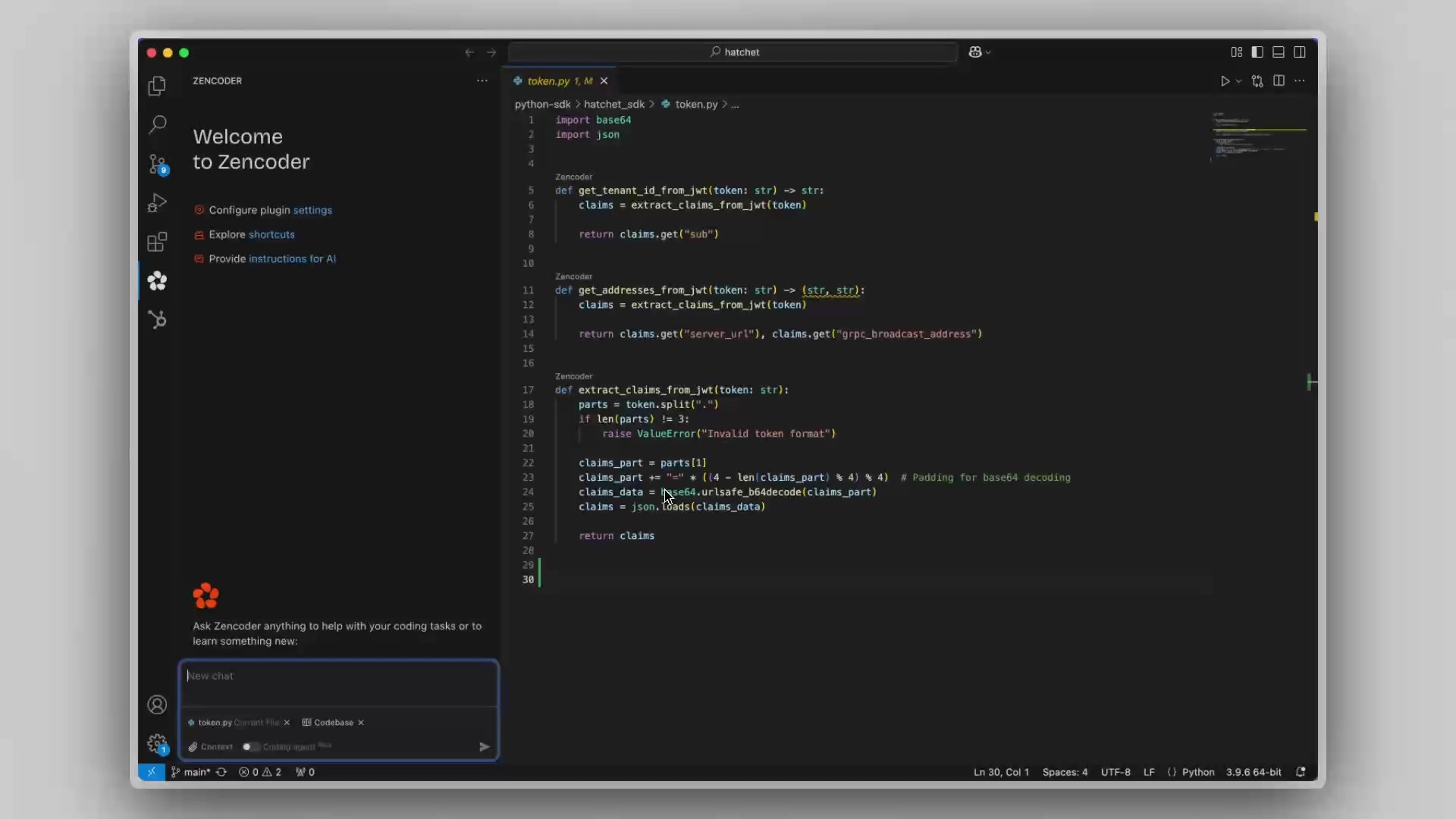
ai chat
21–30: Refactoring, Optimization & Code Review Prompts
- “Refactor this code [paste] for readability, maintainability, and SOLID principles without changing behavior. Show before/after diff and explain every change.”
- “Optimize this [language] function for performance. Reduce time complexity, suggest profiling tools, and provide benchmark results format.”
- “Perform a senior-level code review on [paste]. Score 1-10 on security, readability, tests, and suggest 5 improvements.”
- “Convert this legacy [old style] code to modern [new style, e.g., async/await + types].”
- “Apply clean code principles: rename variables, extract methods, remove duplication in [paste].”
- “Migrate this [framework] code to the latest version [e.g., React 19] with zero breaking changes.”
- “Review this PR diff [paste] for best practices, security issues, and performance.”
- “Make this code more Pythonic/idiomatic JavaScript — rewrite with list comprehensions/lambdas where possible.”
- “Refactor for testability: add dependency injection and interfaces to [paste].”
- “Optimize database queries in this ORM code — convert to raw SQL where needed and add indexes.”
31–36: Testing & Quality Assurance Prompts
- “Generate comprehensive pytest/Jest unit tests for this function [paste]. Cover 100% happy path, edge cases, errors, and mocks. Include coverage report format.”
- “Write integration + end-to-end tests using Playwright/Cypress for [feature].”
- “Create property-based tests with Hypothesis for this [function].”
- “Generate security tests (OWASP top 10) for this API endpoint.”
- “Write performance/load tests using Locust for [endpoint].”
- “Convert these manual test cases into automated [framework] tests.”
37–43: Documentation, Explanation & Learning Prompts
- “Explain this code like I’m a junior developer: [paste]. Use simple analogies, then add detailed comments to the code.”
- “Generate full API documentation in Markdown + OpenAPI YAML for these endpoints [paste].”
- “Create a README.md with installation, usage, architecture diagram (Mermaid), and contribution guide for my project.”
- “Teach me this concept with code examples: [topic]. Include common pitfalls.”
- “Add JSDoc/PyDoc comments to this entire file explaining every function and parameter.”
- “Summarize this 500-line codebase in a 1-page architecture overview with diagram.”
- “Compare [technology A] vs [B] with pros/cons table and code migration example.”
44–50: Architecture, Design Patterns & Advanced Prompts
- “Design a scalable microservices architecture for [app description]. List services, communication (gRPC/Kafka), databases, caching, and provide Mermaid diagram.”
- “Implement the [design pattern] in [language] for [use case]. Include UML description.”
- “Create a CI/CD pipeline YAML (GitHub Actions) for [stack] with testing, linting, and deployment to AWS.”
- “Generate a secure authentication system using OAuth2 + OpenID Connect for my app.”
- “Plan database schema migration from monolithic to [new design] with zero downtime strategy.”
- “Design an event-driven system using [tech] for real-time features in my SaaS app.”
- “Generate a complete project structure + boilerplate following Domain-Driven Design for [app type].”

How to Write Code with ChatGPT (Easy Guide) | Beebom
5 Real Example Prompts + Sample AI Outputs (Tested Style)
Example #1 – Code Generation (Prompt #2 variant) Your Input to AI Bot: “You are a senior Node.js developer. Create a complete Express + TypeScript POST /api/users endpoint with Zod validation, Prisma ORM transaction, and JWT auth. Return full code for routes, controller, service.”
Sample AI Output (from Grok/Claude-style):
TypeScript
// routes/users.ts
import { Router } from 'express';
import { z } from 'zod';
import { prisma } from '../lib/prisma';
import { authenticate } from '../middleware/auth';

const router = Router();

const createUserSchema = z.object({
  email: z.string().email(),
  password: z.string().min(8),
});

router.post('/users', authenticate, async (req, res) => {
  const { email, password } = createUserSchema.parse(req.body);
  const user = await prisma.$transaction(async (tx) => {
    return tx.user.create({ data: { email, password: hashedPassword } });
  });
  res.status(201).json(user);
});
Code language: JavaScript (javascript)
Explanation: Includes validation, transaction, auth middleware.
Example #2 – Debugging (Prompt #11) Your Input: “Debug this Python error: ‘KeyError: age’. Code: [paste dict access]. Expected: default 0.” Sample AI Output: Root cause = missing key in dict. Fix: user.get(‘age’, 0). Prevention: Use TypedDict or Pydantic models.
Example #3 – Refactoring (Prompt #21) Your Input: “Refactor this messy function [paste] for readability.” Sample AI Output: Before/after diff + “Extracted helper calculate_tax() — now single responsibility.”
Example #4 – Testing (Prompt #31) Your Input: “Generate pytest for Fibonacci function.” Sample AI Output: 8 tests including negative input handling.
Example #5 – Architecture (Prompt #44) Your Input: “Design microservices for e-commerce.” Sample AI Output: 6 services diagram in Mermaid + tech choices.

AI-Powered Code Review for Developer Efficiency | by API4AI | Medium
Bonus: Advanced SEO & Productivity Hacks
- Combine prompts: “Refactor + add tests + document” in one message.
- Use with Cursor or VS Code Copilot Chat for inline suggestions.
- Track your favorite 10 in Notion for quick copy-paste.
- For ML/data science: Add “Use PyTorch 2.5 best practices” to prompts #1–10.
Conclusion: Level Up Your Coding with AI Bots Today
These top 50 AI coding prompts cover 95% of common developer requests in 2026. Start with #1 and #11 today — you’ll write better code faster and learn more along the way.
Bookmark this page, share with your team, and experiment! Which prompt will you try first?
Related reads:
WordPress ready: Copy this entire post into Gutenberg (use Heading blocks, Code blocks, and Image blocks with alt texts like “AI coding prompt example for debugging”). Featured image suggestion: futuristic AI-robot programmer collaboration (use stock from Dreamstime or Unsplash with SEO alt: “Top 50 AI prompts for coding developers 2026”).
Happy coding! 🚀 Let AI handle the repetitive stuff while you focus on architecture and innovation.