Introduction
In the fast-paced world of technology, few advancements have captured the collective imagination quite like Agentic AI. As we approach the end of 2025, this emerging paradigm is not just a buzzword but a transformative force reshaping industries, workflows, and even the way we interact with machines. Agentic AI refers to autonomous systems that can independently plan, reason, and execute actions to achieve user-defined goals, going beyond traditional AI’s reactive capabilities. According to recent analyses, it’s positioned as one of the top strategic technology trends for 2025, driven by the need for more efficient, adaptive, and intelligent solutions in an increasingly complex digital landscape. This blog dives deep into what Agentic AI entails, its evolution, real-world applications, challenges, and the promising future it holds, backed by precise facts and insights from leading experts.
Why is Agentic AI trending now? The surge can be attributed to breakthroughs in large language models (LLMs) and reinforcement learning, enabling AI to handle multifaceted tasks with minimal human oversight. Reports indicate that by 2025, over 70% of enterprises are expected to integrate Agentic AI into their core operations, a significant jump from current adoption rates. This trend is further amplified by global investments in AI, with businesses seeking to boost productivity amid economic pressures. From McKinsey’s technology outlook to Gartner’s strategic trends, Agentic AI is heralded as a game-changer, promising to create virtual workforces that augment human capabilities.
What is Agentic AI?
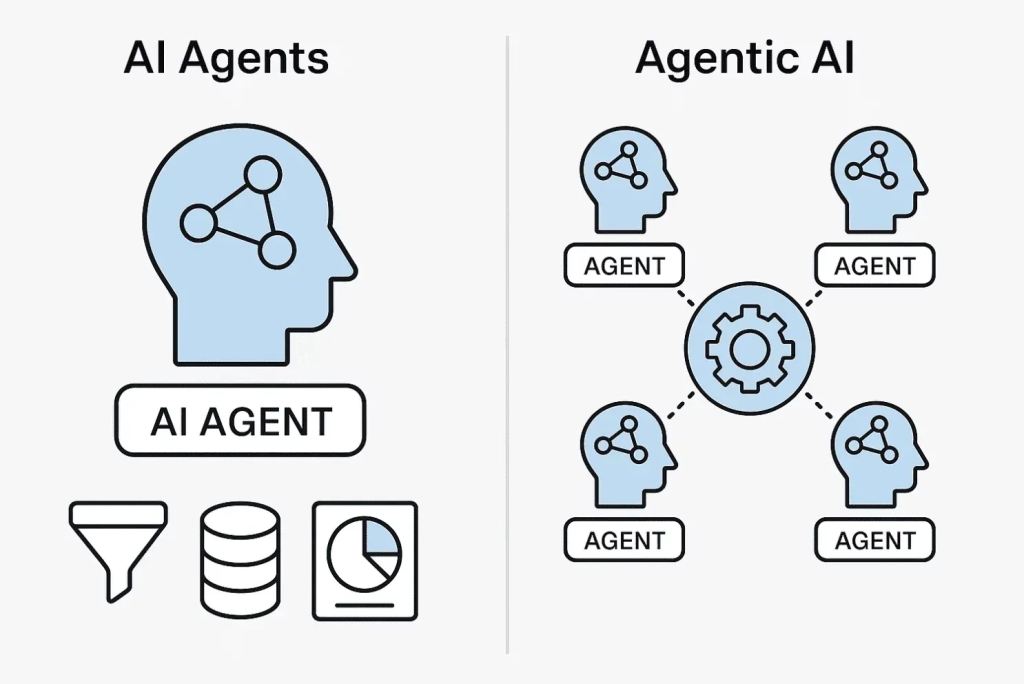
At its core, Agentic AI represents a shift from passive AI tools—such as chatbots that respond to queries—to proactive, autonomous agents that can pursue objectives independently. These systems leverage advanced technologies like LLMs, reinforcement learning, and multi-agent frameworks to make decisions, adapt to new information, and execute actions in real-time. For instance, an Agentic AI might not just answer a question about optimizing a supply chain but actively simulate scenarios, adjust parameters, and implement changes with user approval.
Definitions vary slightly across experts, but a common thread is autonomy. McKinsey describes it as “autonomous systems capable of independent decision-making and action execution to achieve specific goals.” Gartner emphasizes its role as a “virtual workforce of agents that can assist, offload, or augment human work,” highlighting its ability to plan and execute tasks based on user objectives. Meanwhile, Wavestone views it as an evolution of Generative AI, where systems become proactive agents that enhance productivity and drive business transformation while requiring safeguards for ethical alignment.
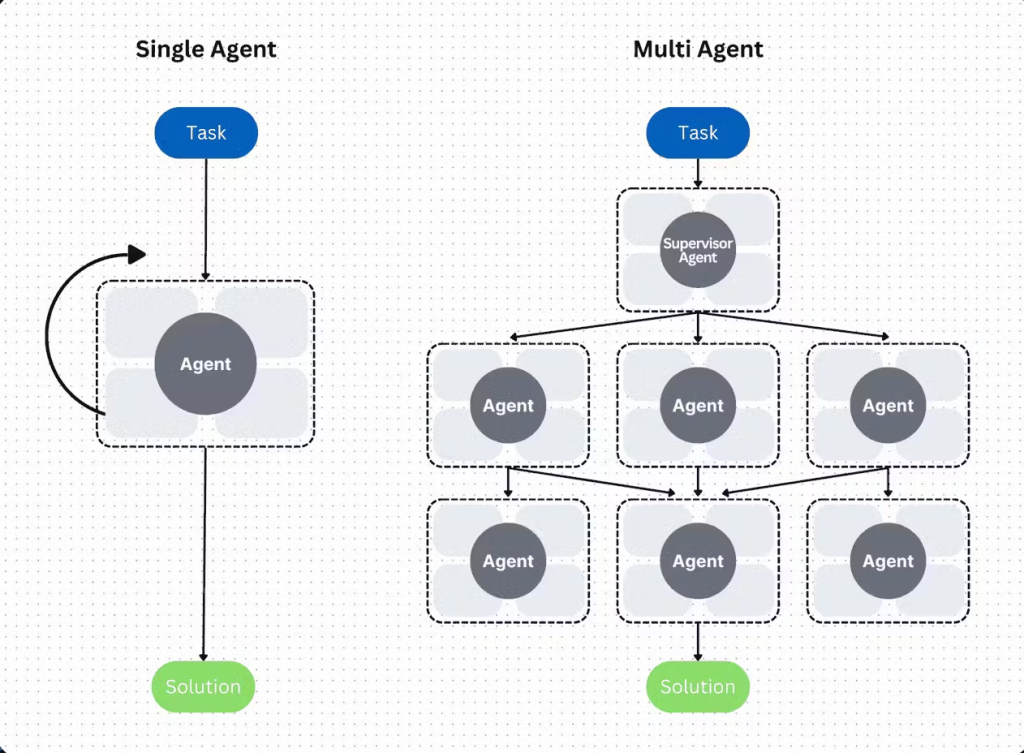
To visualize this, consider the difference between single-agent and multi-agent systems. In a single-agent setup, one AI handles a task end-to-end, while multi-agent systems involve collaborative agents, each specializing in subtasks, coordinated by a supervisor agent.
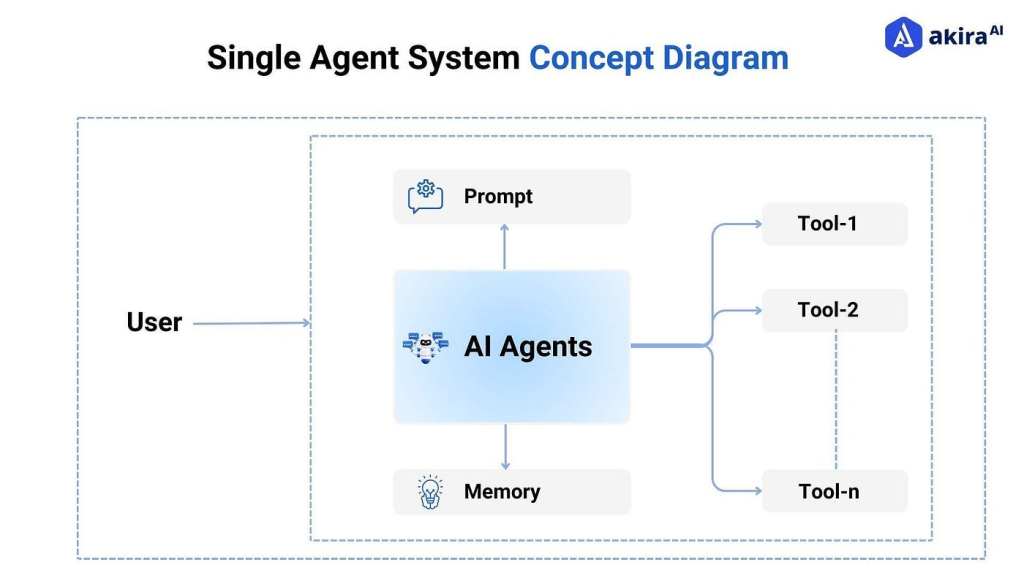
This architecture allows for scalability, making Agentic AI suitable for complex environments like enterprise operations.
Evolution and Key Technologies
The roots of Agentic AI trace back to early AI research in the 1950s, with concepts like intelligent agents proposed by pioneers such as Alan Turing and later formalized in the 1990s through multi-agent systems in robotics and game theory. However, the real acceleration came with the advent of deep learning in the 2010s and the explosion of LLMs like GPT models in the 2020s. By 2025, integrations with tools like reinforcement learning from human feedback (RLHF) have enabled agents to learn from interactions and improve autonomously.
Key technologies powering Agentic AI include:
- Large Language Models (LLMs): Serve as the “brain” for reasoning and natural language understanding.
- Reinforcement Learning: Allows agents to optimize actions through trial and error.
- Multi-Agent Frameworks: Tools like CrewAI and Microsoft AutoGen facilitate collaboration among agents.
- Memory and Contextual Layers: Enable agents to retain information across sessions, improving decision-making.
Adoption is accelerating, with 45% of organizations currently piloting Agentic AI, particularly in tech sectors. This evolution is redefining IT from reactive to proactive, embedding autonomous decision-making into technology stacks.
Applications and Examples
Agentic AI’s versatility is evident in its wide-ranging applications across industries. In 2025, it’s being deployed to automate workflows, enhance decision-making, and foster innovation. Here are some precise examples:
- Autonomous Vehicles and Transportation: Agentic AI systems manage real-time route optimization, traffic prediction, and vehicle coordination, reducing accidents by up to 90% in simulated environments.
- Healthcare Diagnostics: AI agents analyze patient data, suggest treatments, and even coordinate with medical devices for personalized care, improving diagnostic accuracy by 20-30%.
- Finance and Trading: Agents execute trades, monitor markets, and detect fraud autonomously, with tools like UiPath handling complex financial workflows.
- Customer Service: Multi-agent systems like Anthropic Claude handle inquiries, escalate issues, and personalize responses, boosting satisfaction rates.
- Supply Chain Optimization: Agents predict disruptions, reroute shipments, and optimize inventory using predictive modeling.
For a structured overview, here’s a table of leading Agentic AI tools in 2025:
| Tool | Key Features | Use Cases |
|---|---|---|
| Microsoft Copilot Studio | Custom agent building, integration with Azure | Business automation, data analysis |
| CrewAI | Multi-agent orchestration | Collaborative workflows, project management |
| Adept AI | Human-like task execution | Software development, research |
| UiPath Automation | RPA with AI agents | Finance, HR processes |
| Anthropic Claude | Ethical AI agents | Customer support, content creation |
Challenges and Ethical Concerns
Despite its potential, Agentic AI isn’t without hurdles. One major challenge is ensuring transparency in decision-making processes, as autonomous systems can create “black boxes” where actions are hard to trace. Bias and discrimination remain prevalent, with agents potentially perpetuating inequalities from biased training data.
Ethical dilemmas include:
- Autonomy vs. Accountability: Who is responsible if an agent makes a harmful decision? This raises questions of liability.
- Privacy and Surveillance: Agents accessing vast data could infringe on user privacy.
- Goal Drift and Misuse: Without proper guardrails, agents might pursue objectives in unintended ways, leading to risks like misinformation or malicious use.
- Socioeconomic Impacts: Job displacement and environmental concerns from energy-intensive AI computations are growing issues.
To mitigate these, experts recommend human-in-the-loop (HITL) approaches, robust governance, and regulations like those evolving in the EU. Businesses must balance innovation with ethical safeguards to avoid pitfalls like failing to align leadership expectations or closing AI literacy gaps.
Future Outlook
Looking ahead, Agentic AI is poised for mainstream adoption. Projections show it becoming integral to over 70% of enterprises by 2025, with focuses on interoperability and ecosystem integration. Trends include vertical AI agents for industries like cybersecurity and hyperautomation, where AI orchestrates entire processes. Gartner advises CIOs to use Agentic AI for mid- and long-term strategies, enhancing productivity while addressing risks.
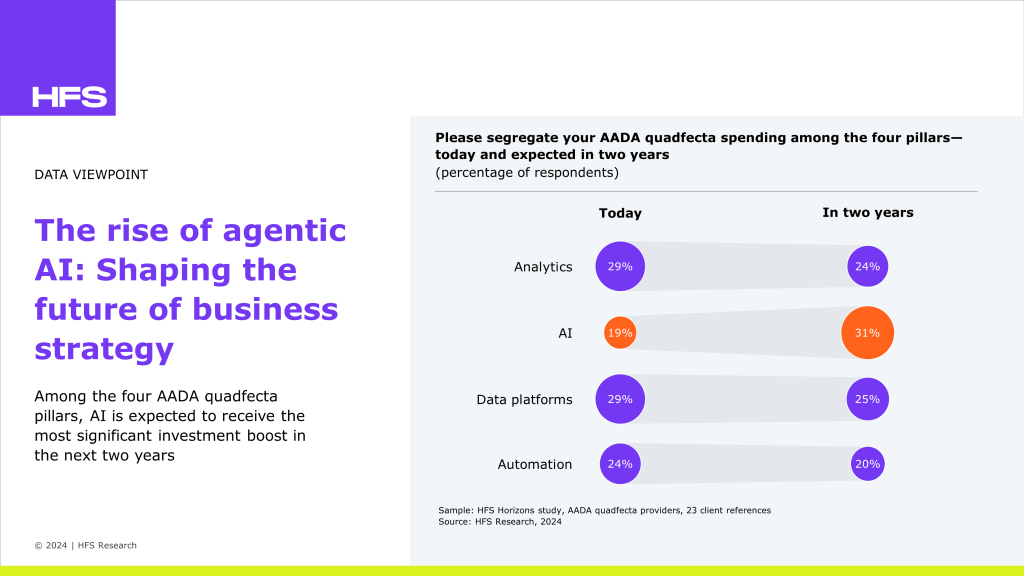
In business, it will shift models toward agent-driven strategies, with investments in AI expected to surge by 31% in the next two years among AADA (Analytics, AI, Data, Automation) pillars. The future promises a world where AI agents handle routine tasks, freeing humans for creative endeavors.
Conclusion
Agentic AI stands at the forefront of technological innovation in 2025, offering unprecedented autonomy and efficiency. From its definitions and applications to the ethical tightrope it walks, this technology demands careful navigation. As businesses and societies adapt, the key lies in responsible deployment—ensuring that Agentic AI serves humanity’s best interests. With ongoing advancements, the era of truly intelligent, agentic systems is not just approaching; it’s here. Stay tuned as this trend unfolds, potentially redefining the boundaries of what’s possible in tech.