cPanel’s January 2026 price adjustments were not a surprise. They were the continuation of a multi-year trend. What changed is the number of operators who finally moved.
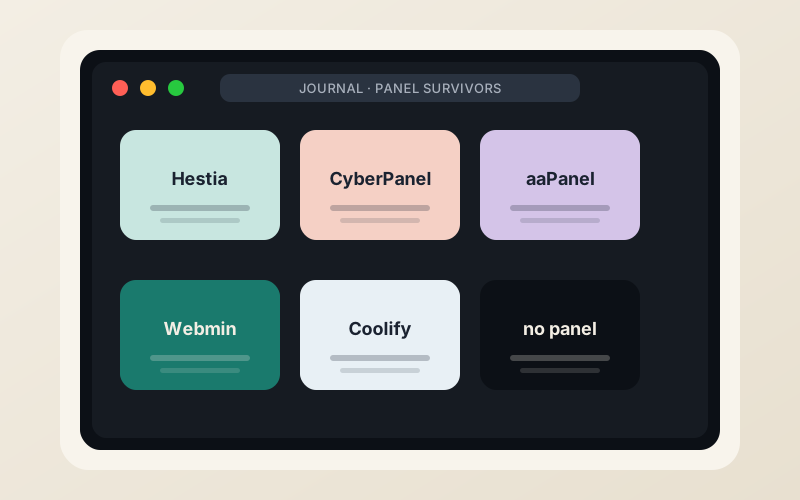
The open-source and low-cost panels that absorbed the migrations are the same names that were already gaining ground: Hestia, CyberPanel, aaPanel, and to a lesser extent Webmin/Virtualmin and the newer Docker-oriented tools.
What “survived” means in practice
Survival is not about GitHub stars. It is about:
- Install scripts that still work on current AlmaLinux and Ubuntu LTS.
- Active enough development that security issues are closed.
- A community or commercial support option that can answer a ticket when the operator is stuck.
- Feature coverage that is good enough for the jobs people actually run (WordPress, mail, SSL, basic multi-account).
Hestia and CyberPanel clear that bar for a large share of the single-server and small multi-site use cases. aaPanel does as well for the customers who already know it. The purely abandoned forks do not.
The limits that still generate tickets
Free panels do not magically create good mail reputation. They do not replace a clean network or a host that answers when BGP or an upstream issue appears. They also do not remove the need for the operator to understand backups, updates, and the blast radius of a compromised account.
The customers who treat the panel as a complete substitute for operational knowledge eventually open the ticket that begins with “everything is down and the panel will not load.”
No panel as a valid choice
A growing minority of VPS customers simply do not install a classic control panel. They run nginx or Caddy, certbot, and systemd units. For application-centric or Docker-heavy workloads this is often cleaner. The trade-off is that every change requires SSH or automation the customer owns.
The practical recommendation
If you left cPanel because of price and you still need a panel, Hestia or CyberPanel are the two we see succeed most often in 2026 for typical web workloads. If you left because you outgrew the shared-hosting model entirely, consider whether you need a panel at all.
The host underneath still matters more than the panel on top.
Written at the desk
ChadBe the first to weigh in.