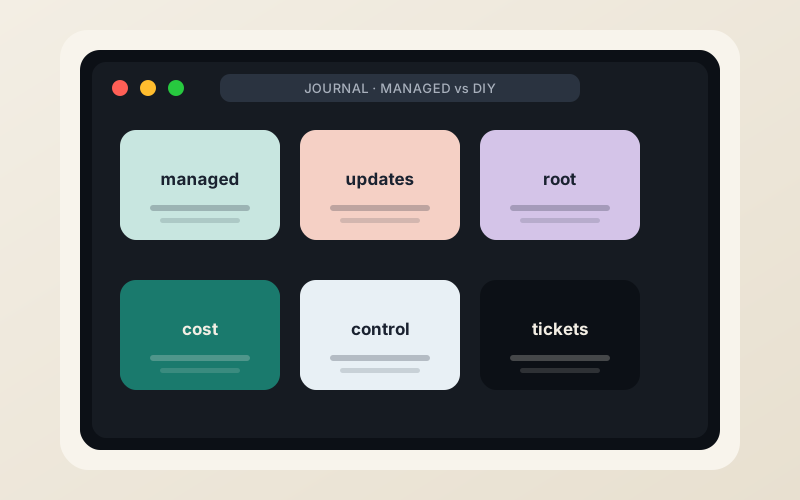
Managed WordPress hosts promise updates, security, and performance tuning so the customer does not have to think about the server. A self-managed VPS gives root access and full responsibility. Both models work. The better choice depends on who is available when something breaks at midnight.
What managed actually covers
- Core, theme, and plugin updates (with varying degrees of testing).
- Server-level caching and often a tuned PHP stack.
- Malware scanning and basic hardening.
- Staging environments and one-click restores on many platforms.
- Support staff who know WordPress-specific failure modes.
The customer still has to choose good plugins, avoid obvious security mistakes, and own the content. Managed does not mean “nothing can go wrong.”
What self-managed requires
- Willingness to apply updates or automate them safely.
- Comfort with SSH, logs, and basic firewall rules.
- A backup strategy that is tested, not just configured.
- Acceptance that a misconfigured plugin or a bad deploy is the customer’s to fix (or to pay someone to fix).
The upside is control, predictable long-term pricing on many VPS providers, and the ability to run non-WordPress services on the same machine.
Cost over time
Managed plans often look higher on a monthly basis but include labor. A cheap VPS plus the customer’s time (or a freelancer’s invoices) can exceed the managed price once real incidents appear. Customers who already have Linux skills and who treat the VPS as part of their job usually come out ahead on pure cost. Everyone else should price their own time honestly.
How we advise
If WordPress is the only workload and the team does not want to own the server, managed is the lower-stress path. If the team already runs other services, needs custom stacks, or wants the same machine for multiple roles, a VPS with good snapshots and human support is often the better long-term home.
Written at the desk
ChadBe the first to weigh in.