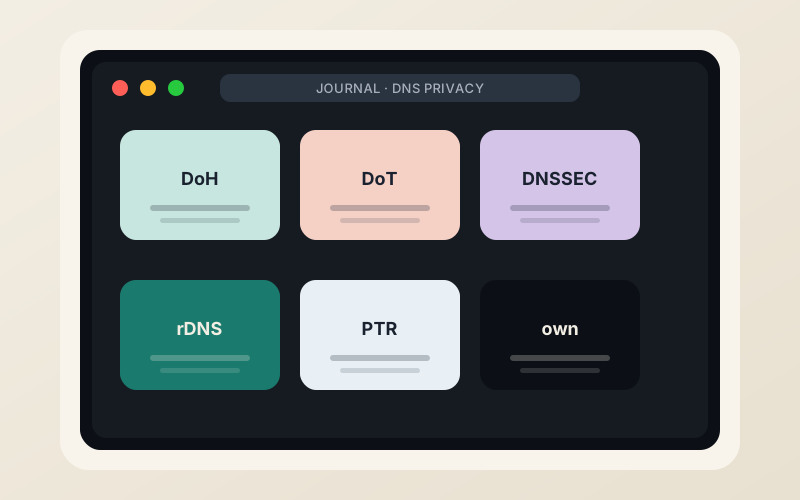
DNS is one of the last places where a lot of metadata still flows in clear text or through third parties. Hosts that own their own resolvers, their own authority servers, and their own network have more levers to keep that metadata under control.
What ownership enables
- Authoritative DNS that does not require sending every query log to a third-party DNS company.
- The ability to offer or support DNS-over-TLS / DNS-over-HTTPS for customer resolvers where it makes sense.
- Correct rDNS and PTR records that match the actual service, which improves both reputation and clarity.
- DNSSEC signing under the same operational control as the rest of the zone.
None of these require the host to be perfect. They require the host to be the party that can make the configuration and the policy decisions without negotiating with an external DNS vendor for every change.
The tickets that appear
Customers ask about DNSSEC, about why a PTR does not match, about whether their resolver queries are being logged and sold, and about how to move a zone without downtime. A host that runs the DNS infrastructure in-house can answer those tickets with the actual state of the system rather than with a link to a third-party dashboard.
Privacy as operational practice
Publishing a clear policy about query logging, keeping zone data under the same access controls as the rest of the customer account, and avoiding the injection of third-party trackers at the DNS layer are all easier when the metal and the software are under the same roof.
The privacy features that survive are the ones the operator can actually control. Ownership of the metal is not sufficient, but it removes a common external dependency that many hosts still accept by default.
Written at the desk
ChadBe the first to weigh in.