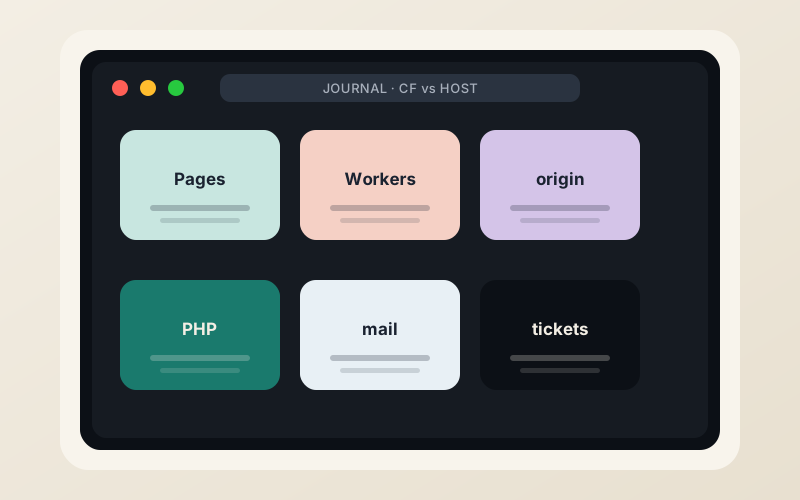
Cloudflare Pages (and the broader Workers platform) is excellent for static sites, Jamstack front ends, and lightweight dynamic logic at the edge. Traditional shared or VPS hosting is still the default for PHP applications, WordPress, email, and anything that expects a conventional Linux user account.
The comparison only becomes useful when you name the workload.
Pages shines when
- The site is mostly static or can be pre-rendered.
- You are comfortable with Git-based deploys and edge functions.
- You do not need traditional email, cPanel, or long-running processes on the same box.
- Global distribution and DDoS absorption are high priorities.
Traditional hosting still wins when
- You need PHP, MySQL, cron, and a normal file system without rewriting the app.
- Mailboxes, forwarders, and deliverability are part of the same service.
- The customer expects a control panel and human tickets for routine changes.
- The application was not designed for a serverless or edge model.
Hybrid patterns we see
Many sites put the marketing pages on Pages and keep the application, membership area, or WordPress install on a conventional host. DNS makes the split invisible to visitors. The ticket volume stays manageable when each side has a clear owner.
Trying to force a classic WordPress site into a pure edge model usually creates more work than it saves. The reverse—running a fully static brochure site on a full cPanel account—is possible but rarely optimal.
Decision rule
If the primary need is a WordPress site, email, or a traditional LAMP application, start with conventional hosting. If the primary need is a fast static or lightly dynamic front end with global reach, Pages is worth a serious look. Most real projects end up using both for different pieces.
Written at the desk
ChadBe the first to weigh in.