In 2026, AI chatbots have revolutionized how we research, create, and problem-solve. But when it comes to ChatGPT vs Perplexity AI, which one reigns supreme? ChatGPT, powered by OpenAI’s versatile models, excels in creativity and everyday tasks, while Perplexity AI shines as a real-time research engine with unmatched accuracy. This head-to-head comparison breaks down pros, cons, key differences, and real-world use cases to help you decide the best AI tool for your needs.
Key Features Face-Off
Here’s a quick ChatGPT vs Perplexity AI comparison in 2026:
| Feature | ChatGPT | Perplexity AI |
|---|---|---|
| Core Strength | Versatile content creation, coding, and conversational AI | Real-time web search, fact-checking, and cited research |
| Models | GPT-5 and variants (multimodal: text, voice, images) | Integrates OpenAI, Anthropic (Claude), and custom Sonar Pro |
| Pricing | Free tier; Plus ($20/mo), Pro ($200/mo) | Free tier; Pro ($20/mo) |
| Best For | Brainstorming, writing emails, custom GPTs, coding | Deep research, market analysis, summaries with sources |
| Limitations | Can hallucinate; outdated info in free version | Less creative; focused on search over generation |
| Integrations | Zapier, custom apps, Microsoft tools | Collections for organizing queries; web citations |
ChatGPT offers broad utility for creative and technical tasks, adapting to user conversations over time. Perplexity, on the other hand, prioritizes precision with live data pulls, making it ideal for professionals needing verifiable insights.
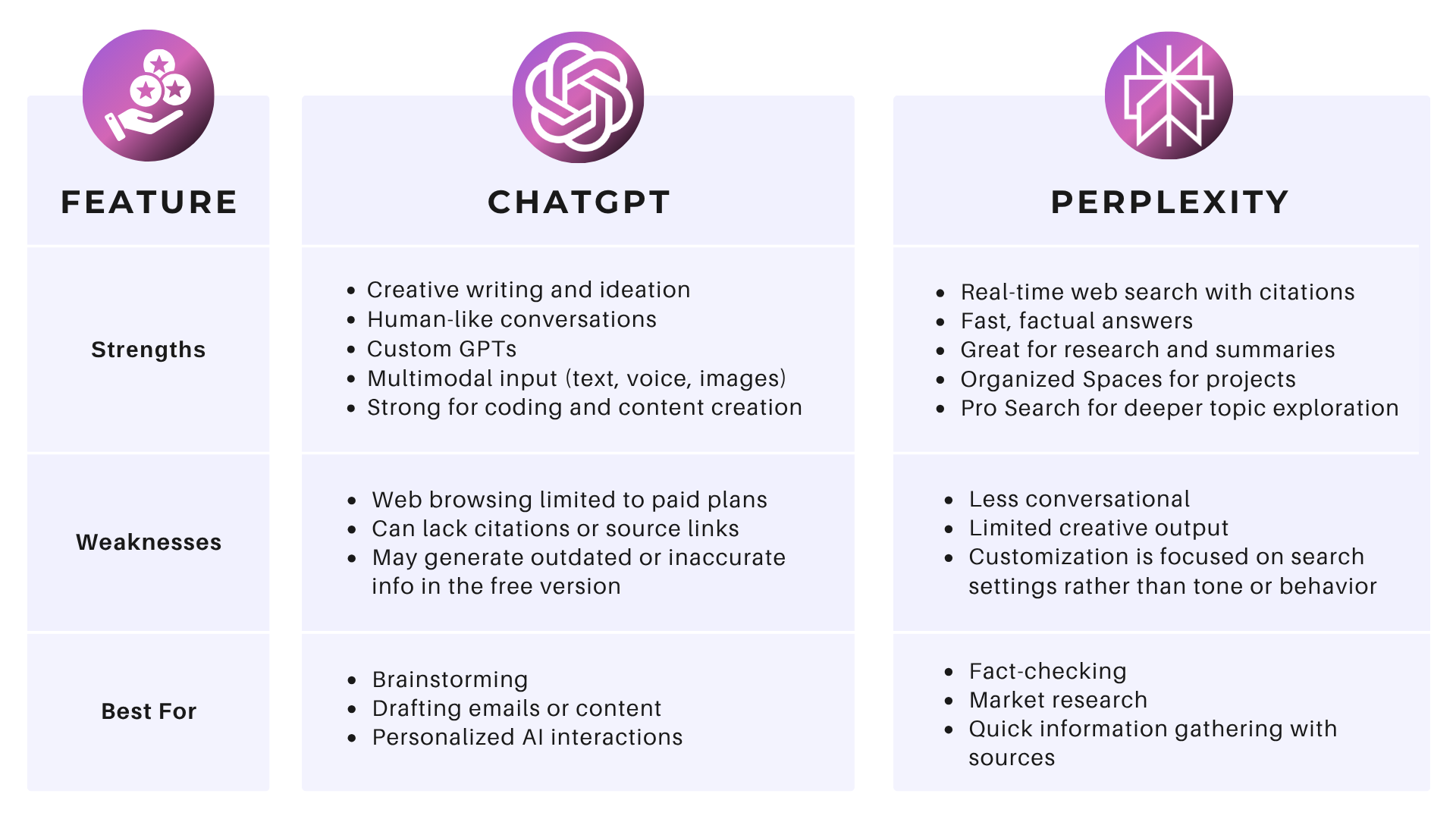
ChatGPT vs Perplexity: Which AI Tool Is Best in 2025?
Pros and Cons: ChatGPT
Pros:
- Highly versatile for tasks like drafting articles, coding, and personalized interactions.
- Multimodal capabilities (e.g., image generation, voice chats).
- Custom GPTs for tailored workflows.
- Strong in creative writing and brainstorming.
Cons:
- Prone to inaccuracies or “hallucinations” without real-time updates.
- Limited context retention in long sessions.
- Web browsing restricted to paid plans.
Pros and Cons: Perplexity AI
Pros:
- Real-time information with citations, reducing misinformation.
- Excels in research, data analysis, and factual summaries.
- Organized Spaces for projects and quick video/image searches.
- Affordable Pro tier with advanced models.
Cons:
- Less suited for creative or long-form content.
- Conversational style feels more rigid.
- No built-in memory for task chaining.

What is Perplexity AI? And how to use it: A designer’s guide
Real-World Showdown: Which Wins?
In tests, Perplexity AI outperforms ChatGPT in research accuracy—pulling fresh data and citations in seconds, perfect for eCommerce merchants tracking trends or analysts fact-checking. ChatGPT wins for versatility, like generating code or fiction, where flair matters more than facts. Recent X discussions highlight users switching to Perplexity for quick insights but sticking with ChatGPT for complex workflows.
For a visual demo, check this 2026 video review: ChatGPT Vs Perplexity | Which Chatbot Is Better? Or dive deeper with AI Model Comparison: ChatGPT vs Perplexity.
The Verdict: Choose Based on Your Needs
If you’re chasing creativity and all-around utility, go with ChatGPT. For reliable, source-backed research in 2026’s fast-paced world, Perplexity AI edges ahead. Many pros use both—Perplexity for facts, ChatGPT for flair. Curious? Try them free and see which boosts your productivity.
For more on AI chatbots comparison or best AI tools 2026, explore Perplexity vs ChatGPT detailed guide.