In a electrifying twist of technological fate, OpenAI and Anthropic unleashed their flagship models—ChatGPT 5.3 (powered by GPT-5.3 Codex) and Claude Opus 4.6—on the same day in early February 2026. These AI titans aren’t just incremental upgrades; they represent a seismic shift in how machines think, code, and collaborate. As benchmarks shatter and real-world applications soar, the battle lines are drawn: speed and precision versus depth and endurance. Dive into this high-stakes comparison to discover which model could turbocharge your workflow—or redefine the future of AI itself.

The world's first AI-created AI! GPT-5.3 participa …
Performance Showdown: Benchmarks That Break Barriers
When it comes to raw power, both models deliver jaw-dropping results, but their strengths diverge like forks in a cosmic code. GPT-5.3 Codex blazes trails in coding efficiency, clocking a 25% speed boost over predecessors and dominating benchmarks focused on rapid execution. It scores 77.3% on Terminal-Bench 2.0 and 56.8% on SWE-Bench Pro, making it a beast for iterative software projects. Meanwhile, Claude Opus 4.6 claims supremacy in reasoning-heavy arenas, leading with 81.42% on SWE-Bench Verified and outperforming GPT-5.2 by 144 Elo points on GDPval-AA—a metric for economically valuable tasks like finance and legal analysis.
| Benchmark | GPT-5.3 Codex | Claude Opus 4.6 | Winner |
|---|---|---|---|
| Terminal-Bench 2.0 | 77.3% | 65.4%-81.4% | Mixed (Codex for speed, Opus for depth) |
| SWE-Bench Pro | 56.8% | ~57% | GPT-5.3 Codex |
| OSWorld Verified | 64.7% | 72.7% | Claude Opus 4.6 |
| GDPval-AA | High (70.9%) | Industry Leader (+144 Elo) | Claude Opus 4.6 |
| Humanity’s Last Exam | Not specified | Top Score | Claude Opus 4.6 |
Real-world tests amplify the intrigue. In a head-to-head video demo, GPT-5.3 Codex built a Polymarket competitor in under 4 minutes, while Opus 4.6 took longer but delivered a superior UI with 96 tests versus Codex’s 10. User reports from production codebases show GPT-5.3 achieving ~0.70 quality scores at under $1 per task, edging out Opus’s ~0.61 at ~$5 per task—highlighting Codex’s cost-efficiency edge.
Feature Face-Off: Tools for Tomorrow’s Innovators
GPT-5.3 Codex thrives as a steerable coding virtuoso, with mid-task redirection allowing users to interrupt and refine outputs in real-time—ideal for dynamic debugging and autonomous game-building. Its 128K-200K token context window ensures token-efficient performance, and it’s the first model to contribute to its own creation, spotting vulnerabilities with surgical precision.
Claude Opus 4.6, on the other hand, unleashes multi-agent orchestration: spin up specialized teams for research, UX, and testing, all collaborating seamlessly. Its beta 1M token context window handles massive codebases without breaking a sweat, while features like adaptive thinking and compaction optimize for long-haul tasks. Effort controls balance smarts with speed, making it a powerhouse for enterprise workflows.
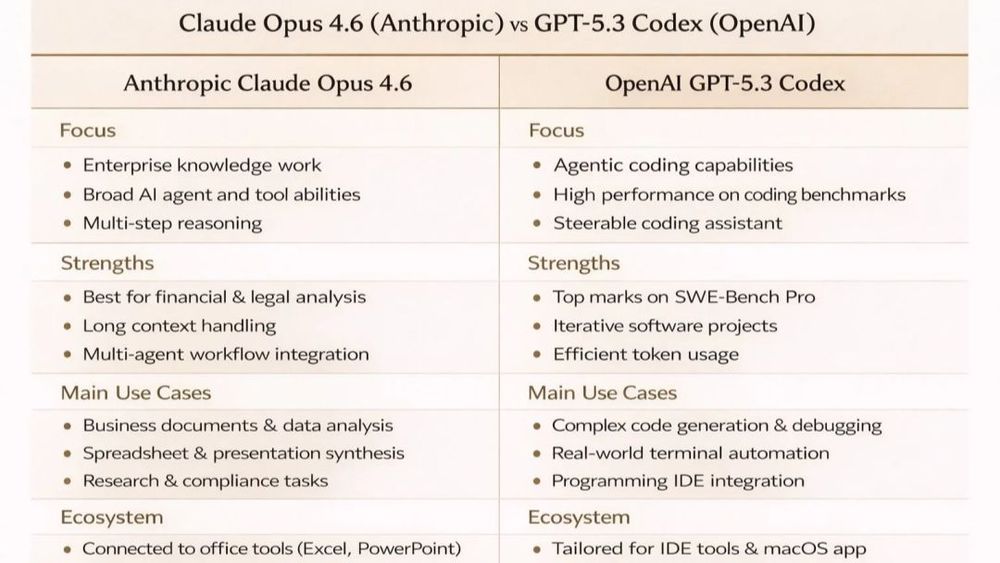
Claude Opus 4.6 vs GPT-5.3 Codex: A Practitioner’s Neutral …
Usage and Real-World Impact: From Labs to Livelihoods
In everyday deployment, GPT-5.3 Codex shines for interactive coding and backend logic, but it falters in full-stack coherence without IDE integration. Developers praise its “Extra High Reasoning” mode for uncovering hidden bugs, yet its proprietary app limits workflow flexibility. Pricing starts at $1.75 per million input tokens, with ChatGPT subscriptions enabling access—perfect for budget-conscious builders.
Opus 4.6 excels in complex, agentic scenarios like security audits and data analysis, integrating natively with IDEs like VS Code for seamless use. However, its higher cost ($5 input/$25 output per million tokens) and verbosity can slow things down. Real-world stats reveal a split: while ChatGPT’s market share dipped slightly between 2025-2026, Opus garners loyalty for usability, with users reporting perfect 100% scores in production tests.
For visuals that capture the essence, check this illustrative comparison:
Claude Opus 4.6 vs GPT-5.3-Codex – Which One Is Better? – Bind AI
Visuals and Videos: See the AI Revolution Unfold
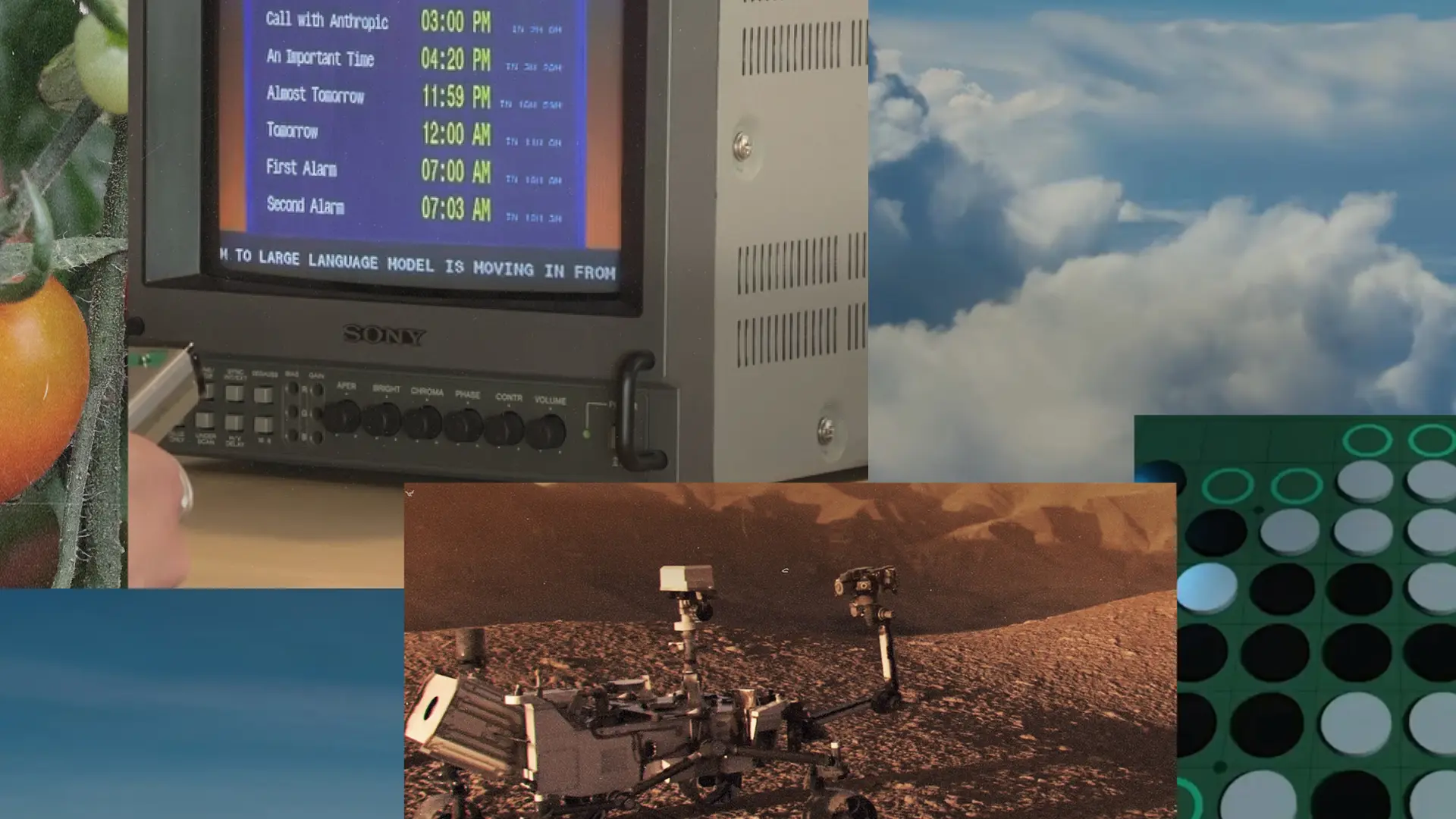
To truly grasp the prowess, explore these resources. A promotional video for Claude Opus 4.6 showcases real-world integrations, from coding apps to Mars rover simulations—watch how it “actually works” in diverse scenarios (link: https://video.twimg.com/amplify_video/2019461071061622784/vid/avc1/480×270/t-eo1SVe8nDIGN–.mp4).
For in-depth analysis, this YouTube breakdown pits the models in a live coding challenge, highlighting Codex’s speed and Opus’s polish (link: https://www.youtube.com/watch?v=gmSnQPzoYHA). Another video dissects benchmarks and features, questioning which wins for real-world dev (link: https://www.youtube.com/watch?v=O5e7mgE0VYk).

The Verdict: Choose Your AI Ally
In this riveting rivalry, GPT-5.3 Codex emerges as the speed demon for fast-paced coding, while Claude Opus 4.6 reigns as the strategic sage for intricate, long-form challenges. No clear victor—polygamy is the pro move: leverage both for unbeatable synergy. As AI evolves at warp speed, these models aren’t just tools; they’re harbingers of a smarter world. Which will you deploy first? The future awaits your command.