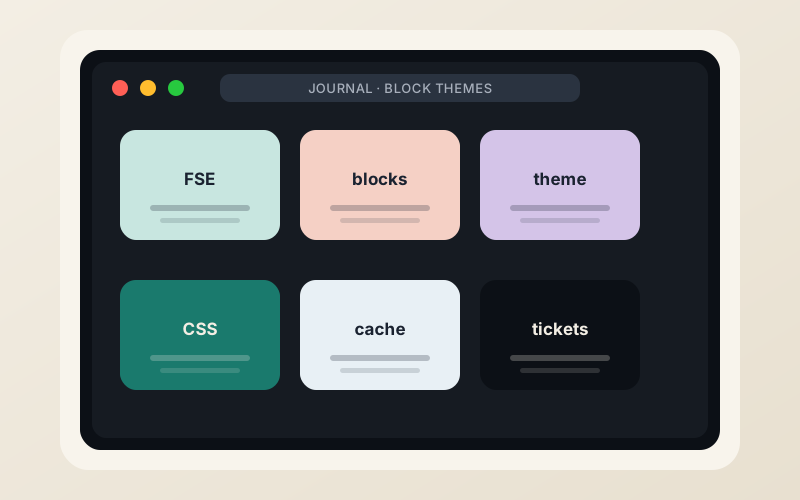
Full site editing and block themes have changed how many WordPress sites are built. The ticket patterns have changed with them.
New ticket types
- Layout shifts or missing styles after a theme or WordPress update.
- Confusion between theme.json settings and custom CSS.
- Performance issues caused by loading large numbers of block styles.
- Caching plugins that need different exclusions for block-based templates.
Classic themes produced a familiar set of problems. Block themes produce a different familiar set. Neither is inherently harder; the knowledge required of support staff simply shifted.
What still helps
- A caching layer that understands WordPress (LiteSpeed Cache remains effective when configured for the site).
- Staging so that theme and core updates can be tested.
- Avoiding the temptation to install every block library that looks useful.
Customers who treat the site editor as a design tool and keep the plugin list intentional open fewer emergency tickets. Customers who mix multiple page builders, block libraries, and custom code on top of a block theme tend to open more.
Host perspective
We see both classic and block themes daily. The successful sites in either model share the same traits: limited plugin surface, tested updates, and caching that matches the stack. The theme architecture matters less than those operational habits.
Written at the desk
ChadBe the first to weigh in.