
Alright, buckle up, because we’re diving into the most famous equation in physics: E=mc². And we’re doing it the fun way—like chatting over coffee with a slightly nerdy but wildly enthusiastic friend who can’t stop geeking out about it.
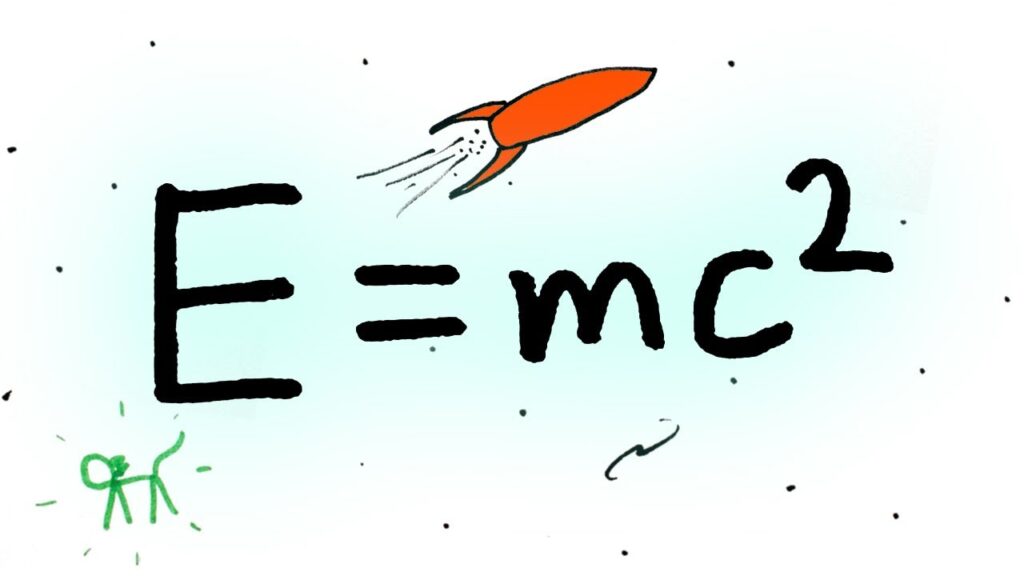
Einstein’s Proof of E=mc²
First, Meet the Man Behind the Magic
Picture this: a guy with wild hair, a mischievous grin, and a brain that basically rewired the universe. That’s Albert Einstein. Born in 1879 in Germany, he wasn’t some stuffy professor from day one. As a kid, he was a late talker—his parents worried something was up. But give him a compass at age 5, and boom: instant fascination with invisible forces. He taught himself calculus and geometry as a tween and dropped his first scientific paper at 16.
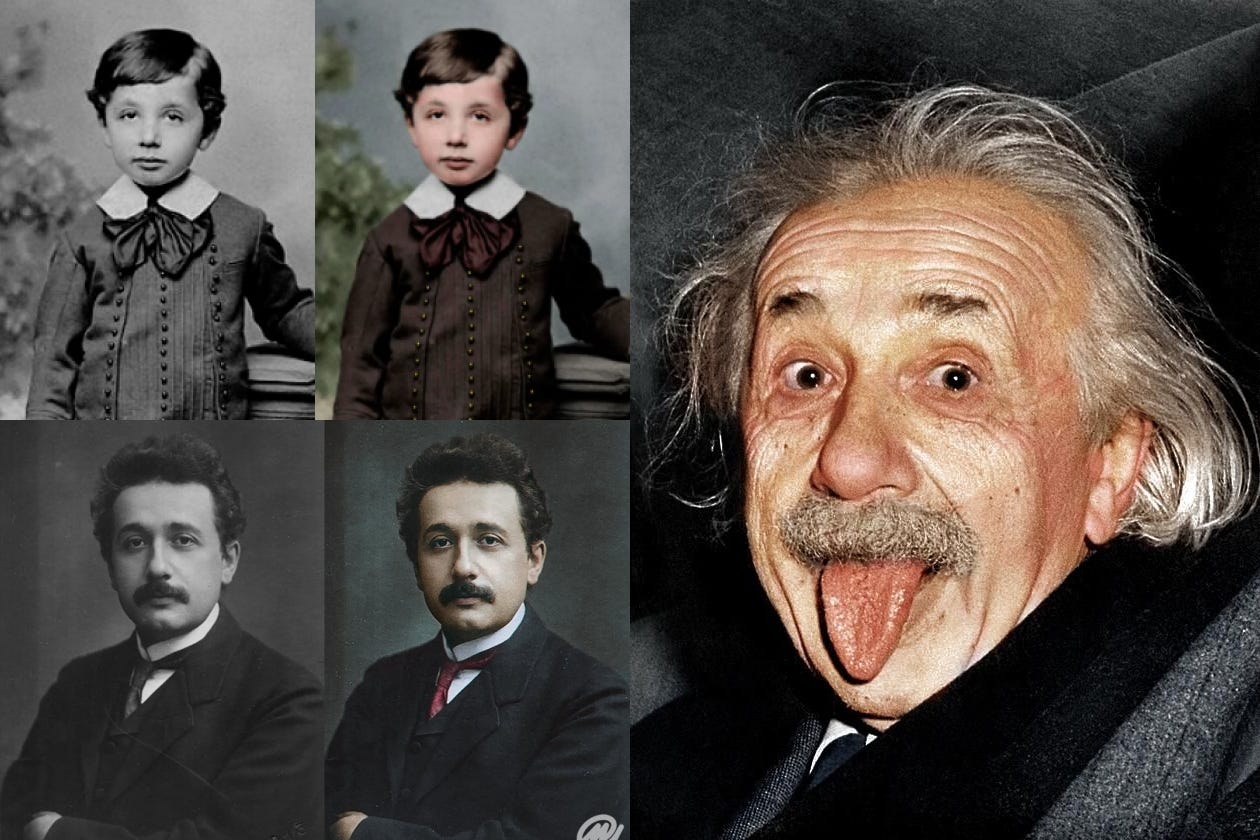
Rare Colorized Photos of Young Einstein, the Genius Born on Pi Day | by Linda Caroll | History, Mystery & More | Medium
Young Einstein (those colorized shots are wild, right?) grew up to work as a humble patent clerk in Switzerland while cooking up revolutionary ideas in his spare time. 1905 was his “miracle year”—he published four game-changing papers, including the one that led to E=mc².
Fun Fact Alert: Einstein was a rebel. He ditched socks because they always got holes (priorities, amirite?), played the violin like a boss to help him think through physics problems, and was an outspoken pacifist and refugee who helped others fleeing danger. He even got offered the presidency of Israel later in life but turned it down. Oh, and that famous tongue-out photo from 1951? He was annoyed by paparazzi and just stuck his tongue out on the way home from an event. Instant legend.
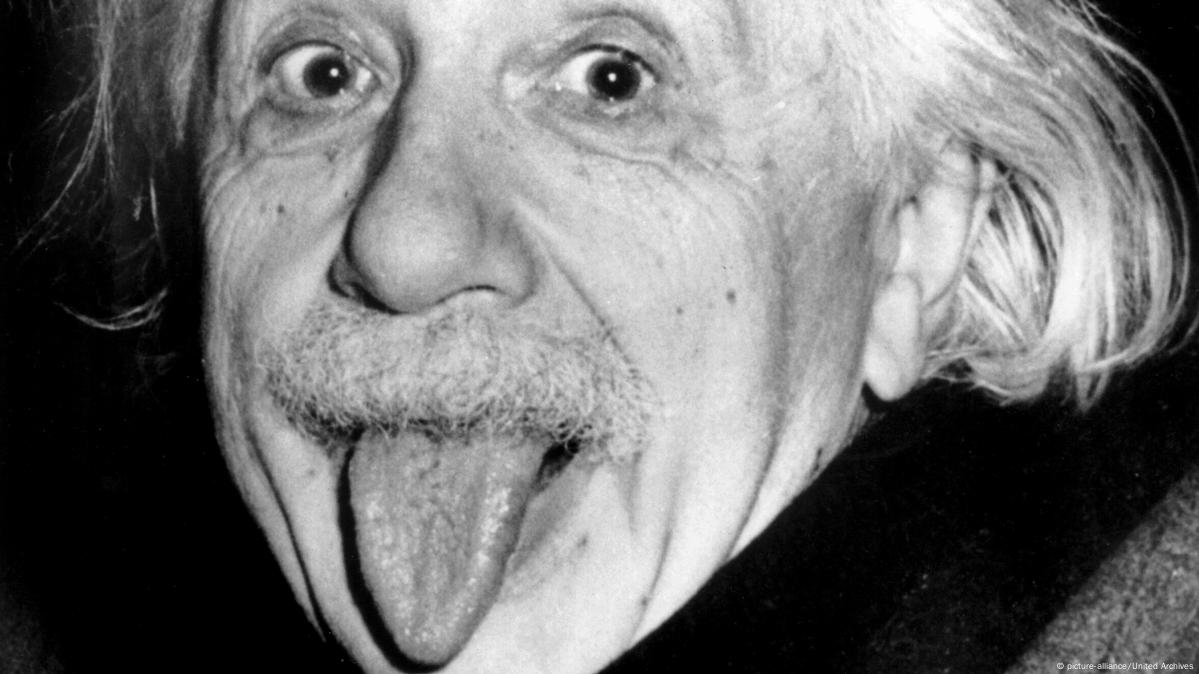
The story behind Einstein’s most iconic photo
So, What Does E=mc² Actually Mean?
In plain English: Energy (E) equals mass (m) times the speed of light (c) squared.
It’s not just some fancy math scribble. Einstein showed that mass and energy are two sides of the same coin. Stuff (mass) can turn into pure energy, and energy can (theoretically) turn into stuff. The “c²” part is the kicker—light speed is about 300,000 km/s, so squared it’s an absurdly huge number. That means even a tiny bit of mass hides a ridiculous amount of energy.

Einstein E Mc2 Equation Stock Illustrations – 52 Einstein E Mc2 Equation Stock Illustrations, Vectors & Clipart – Dreamstime
Imagine a grain of sand. If you could convert all its mass perfectly into energy (we can’t quite, but close enough in some reactions), it’d power a city for days. Mind-blowing, right?
This came out of his special theory of relativity, which says nothing with mass can hit light speed, and weird things happen as you approach it (time slows, lengths shrink—sci-fi stuff that’s real). E=mc² ties mass and energy together in that framework.

Why Einstein’s E = mc² is only half of the equation – Big Think
Why It Matters: From Bombs to Your Hospital Visit
When a heavy atom like uranium splits (fission), a tiny bit of mass “disappears” and turns into massive energy—heat, light, radiation. That’s how nuclear power plants generate electricity and (unfortunately) how atomic bombs work. The mushroom cloud? Pure E=mc² in terrifying action.
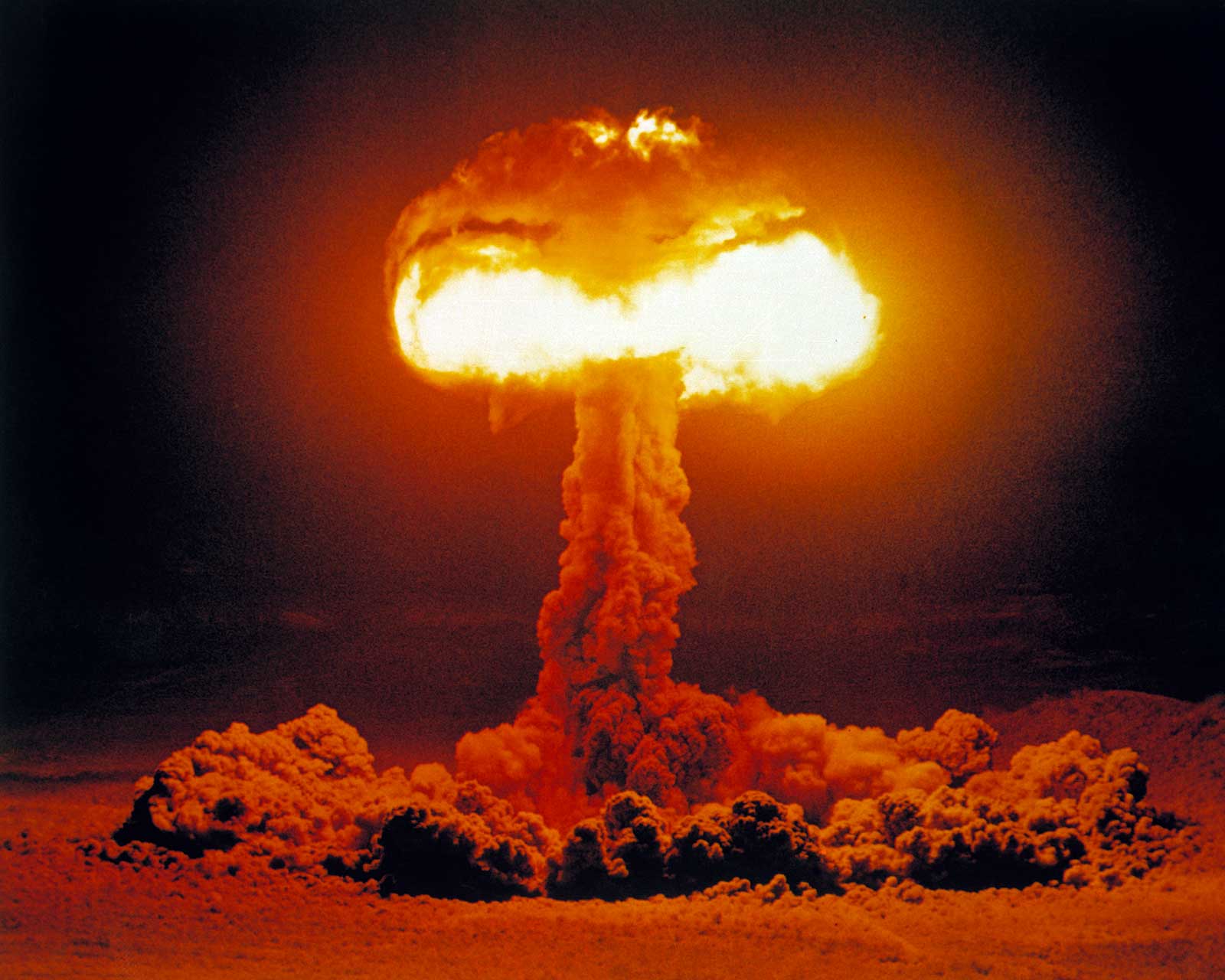
The Mushroom Cloud
On the flip side, fusion (smashing light atoms like hydrogen) powers the sun and stars. That’s why our sun keeps shining—mass converting to energy on a cosmic scale.
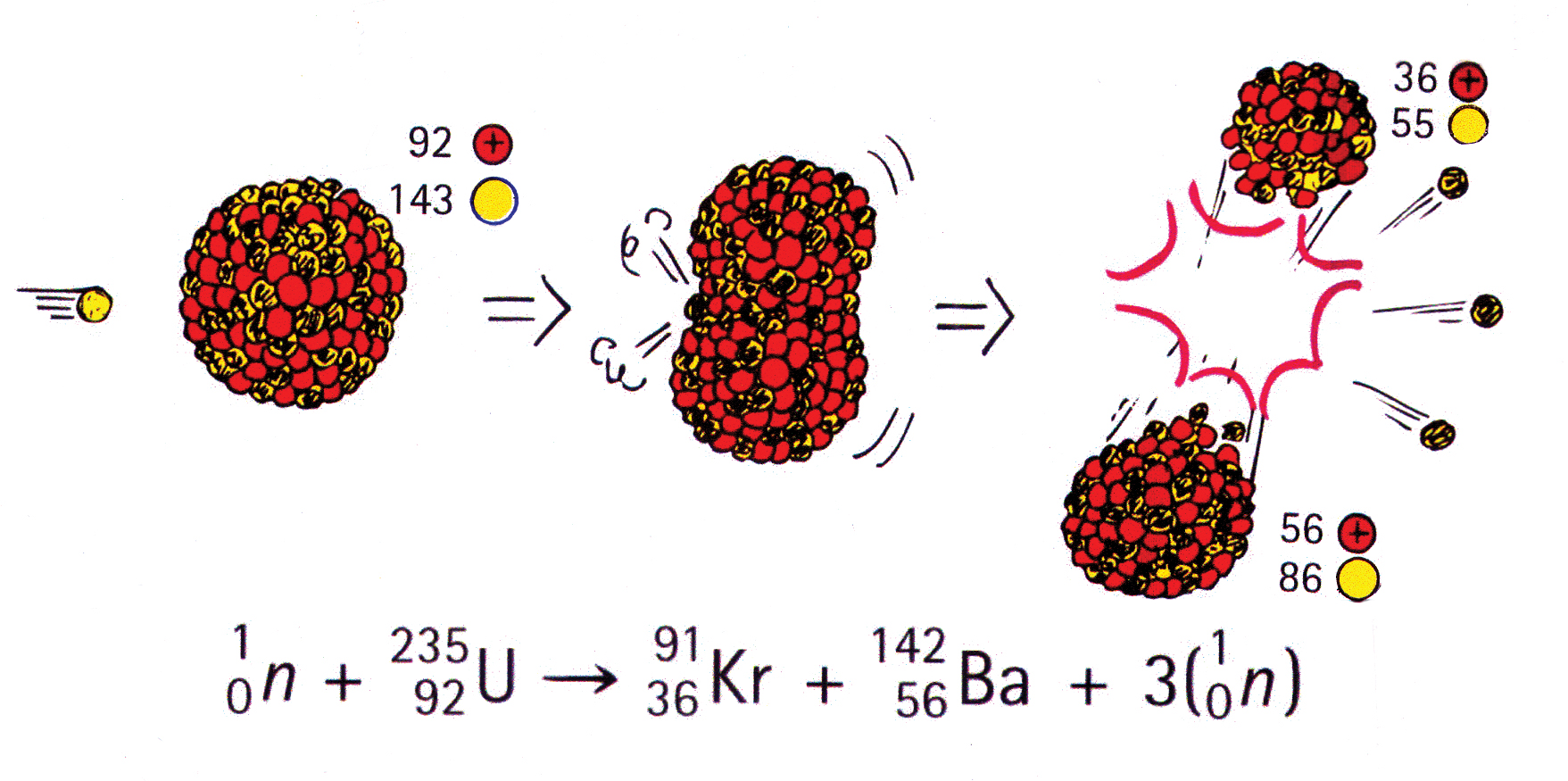
Focus on Physics: How E = mc2 Helps Us Understand Nuclear Fission and Fusion | NSTA
Modern Takes:
- Medicine: PET scans use radioactive tracers where positrons annihilate with electrons, turning mass into detectable gamma rays (E=mc² in action). Doctors “see” inside your body thanks to Einstein.
- Particle Physics: In accelerators like the LHC, we smash particles and create new ones from energy. Mass from energy—boom.
- Everyday-ish: Smoke detectors, glowing exit signs, and carbon dating all involve tiny mass-energy conversions.
It’s not just “old science”—it’s foundational to understanding the universe, from black holes to how your phone’s GPS accounts for relativity tweaks.
Einstein himself called it part of his broader relativity work, and he was humble about it. He knew science is a team sport across time.
So next time you hear E=mc², don’t just nod—picture that wild-haired genius winking at you, saying, “See? The universe is way weirder and more connected than you thought.” And maybe stick your tongue out in solidarity.
What a legend. What an equation. What’s your favorite Einstein story?