Key Points
- Research suggests Webmin, Cyberpanel, Ajenti, VestaCP, CloudPanel, CWP, and AAPanel are viable free cPanel alternatives, each with unique strengths.
- It seems likely that CloudPanel and AAPanel are user-friendly for beginners, while Webmin and Cyberpanel offer advanced customization.
- The evidence leans toward VestaCP and Ajenti being suitable for mid-level users, with CWP excelling for CentOS users.
- Controversy exists around security and support, especially for VestaCP and AAPanel, so consider your needs carefully.
Comparison Overview
Below is a straightforward comparison of the free cPanel Linux web hosting control panel alternatives: Webmin, Cyberpanel, Ajenti, VestaCP, CloudPanel, CWP, and AAPanel. Each control panel is evaluated for its pros and cons, helping you choose based on your technical expertise and server requirements. I’ve also included screenshot URLs for a visual reference.
Pros and Cons
Each control panel has unique features and limitations. Here’s a detailed breakdown in a table for easy comparison:
| Control Panel | Pros | Cons |
|---|---|---|
| Webmin | – Free and open-source – Comprehensive with extensive modules – Turns command-line tasks into a GUI – Solid product for advanced users | – Overwhelming for website owners – Bloated with too many settings – Tough to set up – Not beginner-friendly |
| Cyberpanel | – Clean, simple, and lightweight – Works with LiteSpeed – Free for OpenLiteSpeed – Supports unlimited accounts – Stable with a good community | – Lacks migration scripts from cPanel/Plesk – Needs better WHMCS integration – Can be complex for some users |
| Ajenti | – Free and open-source – Intuitive and responsive interface – Extensible with Python and JavaScript – Low resource usage – Terminal access directly from the panel | – Feels like a community project, not production-ready – Basic and lacks advanced features – Limited to Linux servers – No free technical support |
| VestaCP | – Free core functionality – Simple and user-friendly interface – Integrates with NGINX – Low resource usage – Automated updates | – Not free for file management – Contains multiple unfixed vulnerabilities – No longer actively maintained – Lacks ease-of-use features for beginners |
| CloudPanel | – Free with no licensing costs – Modern, clean interface – Quick setup (under 60 seconds) – High performance and security – Multi-PHP support and free SSL – Focuses on WordPress management | – No built-in file manager (now added) – No DNS or email functionality – Designed for single-user setups – Limited to Debian and Ubuntu |
| CWP (CentOS Web Panel) | – Free and highly acclaimed – Similar layout to cPanel – One-click app installations – Efficient resource usage – Modular and customizable | – Bug complaints from users – Looks outdated (sad gray color) – Lacks multi-server support – Slow support response |
| AAPanel | – Free with open-source core – Easy to use with one-click installations – Stable with real-time monitoring – Supports CentOS, Debian, and Ubuntu – Granular options and responsive developers | – Buggy and feels like beta software – Overwhelming UI for beginners – SSL hiccups – Resource-intensive – No reverse proxy support |
Visual References
For a visual understanding, here are the screenshot URLs for each control panel:
- Webmin: Webmin Screenshots
- Cyberpanel: CyberPanel Official Website
- Ajenti: Ajenti Official Website
- VestaCP: VestaCP Official Website
- CloudPanel: CloudPanel Official Website
- CWP: CWP Official Website
- AAPanel: AAPanel Official Website
Survey Note: Detailed Comparison of Free cPanel Alternatives
This survey note provides an in-depth analysis of seven free cPanel alternatives for Linux web hosting control panels: Webmin, Cyberpanel, Ajenti, VestaCP, CloudPanel, CWP (CentOS Web Panel), and AAPanel. Each control panel is evaluated based on its features, pros, cons, and suitability for different user types, drawing from various online resources to ensure a comprehensive overview. The analysis is current as of June 22, 2025, and aims to assist users in selecting the most appropriate tool for their needs.
Background and Context
cPanel has long been a popular choice for web hosting management due to its user-friendly interface and robust feature set. However, its pricing, especially for resellers, has led many to seek free alternatives. The control panels discussed here—Webmin, Cyberpanel, Ajenti, VestaCP, CloudPanel, CWP, and AAPanel—are open-source or free options designed to manage Linux servers, offering features like website management, email configuration, and server security. Each has been evaluated based on user feedback, official documentation, and comparative articles to provide a balanced view.
Detailed Comparison
AAPanel
Description: AAPanel is a free, open-source hosting control panel for Linux, known for its ease of use and one-click installation features, supporting CentOS, Debian, and Ubuntu.

Pros:
- Free and open-source, ensuring no licensing costs.
- Easy to customize and use, with a well-organized interface.
- Easy installation, reducing setup time.
- Supports CentOS, Debian, and Ubuntu, offering broad compatibility.
- One-click installation for various applications, simplifying deployment.
- Stable server performance with real-time system monitoring, enhancing reliability.
- Manage web services without hassle, improving efficiency.
- Save time with task scheduling, aiding in automation.
- Offers OpenLiteSpeed support, granular options, and responsive developers.
Cons:
- Buggy and feels like beta software, potentially unreliable for production.
- Overwhelming UI for beginners, with too many options.
- SSL hiccups, affecting security setup.
- Resource-intensive, which may strain low-end servers.
- No reverse proxy support, limiting certain configurations.
- No technical support, which may be a barrier for troubleshooting.
Suitability: Best for beginners and users needing a simple, free panel with one-click features, but security and stability may need additional tools.
Download URL: AAPanel Official Website
Ajenti
Description: Ajenti is a Python-based web control panel for Linux and BSD, known for its lightweight and extensible nature, with over 55,000 active users.

Pros:
- Free and open-source, ensuring no licensing costs.
- Intuitive and responsive interface, enhancing user experience.
- Extensible with Python and JavaScript, allowing for custom development.
- Friendly for users with fewer needs and limited Linux knowledge, ideal for small setups.
- Consumes fewer hardware resources over time, suitable for low-end servers.
- Access to Linux terminal directly from the panel, improving efficiency.
- Embedded web-hosted server with notifications, modals, and live updates for real-time management.
Cons:
- Feels like a community project rather than a production-ready control panel, lacking advanced features.
- Basic functionality, not suitable for complex server management needs.
- Limited to Linux servers, restricting compatibility.
- No free technical support, which may be a barrier for troubleshooting.
Suitability: Best for users with basic to intermediate needs, especially those managing small servers or VPS.
Download URL: Ajenti Official Website
CloudPanel
Description: CloudPanel is a free, modern server control panel for Debian and Ubuntu, focusing on simplicity, performance, and security, with no licensing costs.

Pros:
- Completely free with no contract or hidden costs, appealing to budget-conscious users.
- Easy-to-use interface with quick setup, up and running within 60 seconds.
- Maximum performance and security with advanced cloud functionalities.
- Supports multiple PHP versions and all PHP applications, enhancing flexibility.
- Specific PHP configuration for each domain, allowing tailored setups.
- NGINX support and free SSL certificates, improving security and performance.
- No restrictions and supports over 10 languages, catering to a global audience.
- One-click installations for certificates and managing multiple applications effortlessly.
- Hosting multiple PHP applications with different versions on the same server, ideal for developers.
- New, light, clean interface, admin-friendly, easy to manage, and auto-login to phpMyAdmin.
Cons:
- No built-in file manager (though now added, according to some sources), requiring external tools for file operations.
- No DNS or email functionality, limiting its use for comprehensive hosting needs.
- Designed for single-user setups, not ideal for multi-user environments.
- Limited to Debian and Ubuntu, restricting compatibility with other distributions.
Suitability: Best for beginners and users needing a modern, secure panel with multi-PHP support, especially for WordPress-focused setups.
Download URL: CloudPanel Official Website
CWP (CentOS Web Panel)
Description: CWP, formerly CentOS Web Panel, is an open-source control panel for AlmaLinux and other Enterprise Linux distributions, focusing on server management.

Pros:
- Free and highly acclaimed, making it a cost-effective choice.
- Similar layout to cPanel, easing the transition for users familiar with cPanel.
- One-click app installations, simplifying software deployment.
- Efficient resource usage, suitable for resource-constrained environments.
- Modular design for customization, allowing tailored setups.
- Great user-friendly interface, easing the learning curve for novices.
- MySQL process monitoring, backup/recovery, system performance monitoring, and SSL management.
Cons:
- Bug complaints from users, affecting reliability.
- Looks outdated with a gray color scheme, which may deter modern users.
- Lacks multi-server support, limiting scalability for large setups.
- Slow support response time, which can be frustrating for troubleshooting.
Suitability: Ideal for CentOS users and those needing a feature-rich, free panel, but may require patience with documentation and bug fixes.
Download URL: CWP Official Website
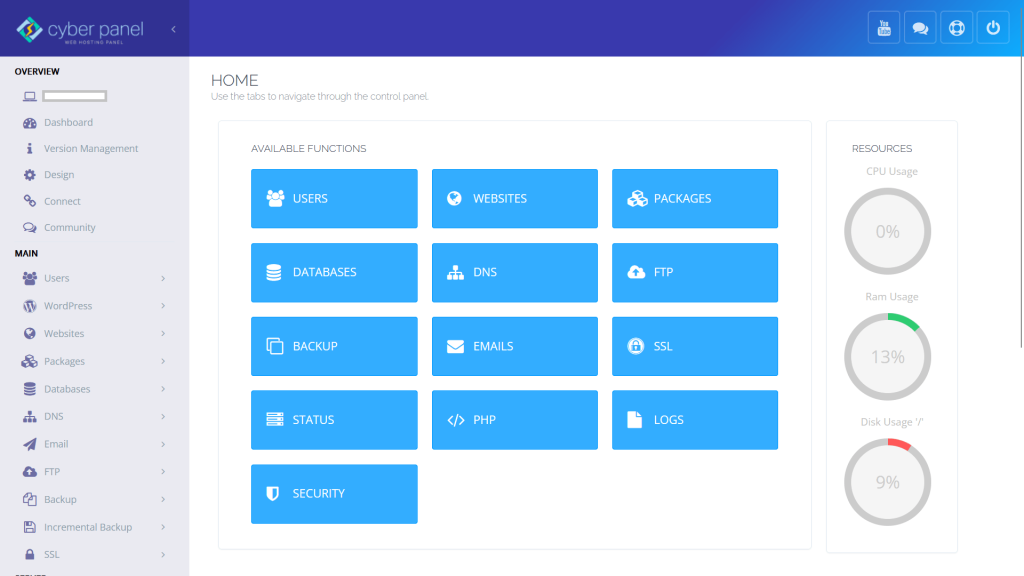
Cyberpanel
Description: Cyberpanel is a web hosting control panel that integrates with the LiteSpeed web server, focusing on simplicity, performance, and security, with both free and paid add-on options.
Pros:
- Clean, simple, and lightweight interface, making it easy to navigate.
- Works with LiteSpeed, offering high performance for web hosting.
- Free for OpenLiteSpeed, ensuring cost-effectiveness for basic needs.
- Supports unlimited accounts, suitable for hosting providers.
- Stable with a good community, providing user support and resources.
Cons:
- Lacks scripts to migrate from cPanel or Plesk, complicating transitions.
- Needs better WHMCS integration for billing and automation, which can be a drawback for resellers.
- Can be complex for some users, especially those new to server management.
Suitability: Best for users needing a lightweight, community-supported panel with LiteSpeed integration, suitable for intermediate to advanced users.
Download URL: CyberPanel Official Website
VestaCP
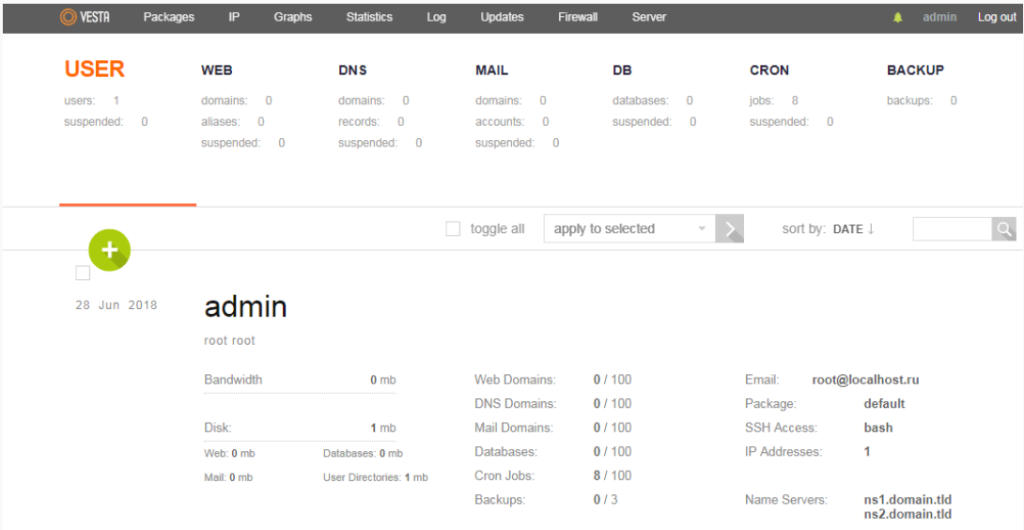
Description: VestaCP is an open-source hosting control panel under the GNU GPL, known for its simplicity and low resource utilization, supporting CentOS, Debian, and Ubuntu.
Pros:
- All core functionality is free, making it cost-effective.
- User-friendly interface with analytics, aiding in server monitoring.
- Easy installation, reducing setup time.
- Supports CentOS, Debian, and Ubuntu, offering broad compatibility.
- Automated update feature ensures the panel stays current.
- Low resource utilization, suitable for servers with limited resources.
- Simple control panel for adding new web domains, enhancing usability.
- Integrates well with NGINX, providing performance benefits.
Cons:
- Customer support is not free, which may be expensive for some (noted as fee-based in discussions).
- Contains multiple unfixed published vulnerabilities, raising security concerns.
- No longer actively maintained, potentially leading to compatibility issues.
- Lacks ease-of-use features for beginners, with annoying bugs reported.
- Not free for file management, which can be a limitation for some users.
Suitability: Ideal for users needing a simple, free panel for basic hosting, but security-conscious users may need additional measures.
Download URL: VestaCP Official Website
Webmin
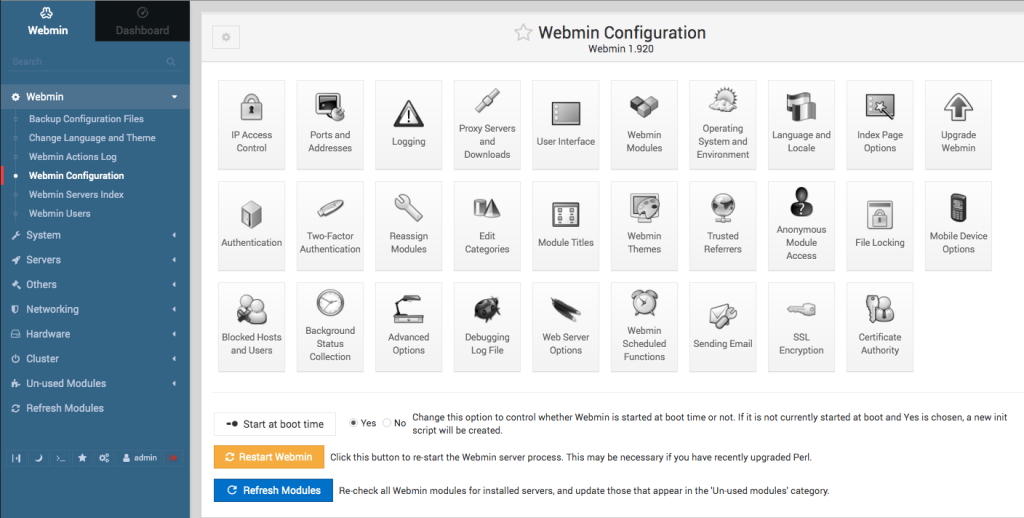
Description: Webmin is an open-source, web-based system administration tool for Unix-like systems, known for its modular design and extensive module library.
Pros:
- Free and open-source, accessible for budget-conscious users.
- Comprehensive with extensive modules, covering a wide range of server management tasks.
- Turns command-line tasks into a GUI, simplifying administration for advanced users.
- Solid product with a long history, ensuring reliability for experienced administrators.
Cons:
- Overwhelming for website owners due to its complexity and extensive settings.
- Bloated with too many options, which can be confusing for non-administrators.
- Tough to set up, requiring technical knowledge for initial configuration.
- Not beginner-friendly, best suited for those with system administration experience.
Suitability: Ideal for advanced users and system administrators who need a highly customizable solution.
Download URL: Webmin Screenshots
Analysis and Recommendations
Each control panel caters to different user needs. For beginners, CloudPanel and AAPanel stand out due to their user-friendly interfaces and quick setup, making server management accessible without deep technical knowledge. However, AAPanel has some security and resource concerns, while CloudPanel lacks DNS and email functionality. Webmin and Cyberpanel are better suited for advanced users, offering extensive customization and advanced features, though Webmin can be overwhelming and Cyberpanel may require migration effort. Ajenti and VestaCP serve as middle-ground options, suitable for users with intermediate needs, but VestaCP’s security concerns and lack of maintenance highlight potential risks. CWP excels for CentOS users, but its outdated appearance and bug complaints may pose challenges for complex setups.
Controversy exists around security and support, particularly for VestaCP, which has been noted for vulnerabilities, and AAPanel, with reports of resource usage and potential privacy issues. Users should assess their security needs and consider additional measures if necessary. The choice ultimately depends on your technical expertise, server type, and specific requirements, such as email management or multi-PHP support.
Key Citations
- HostingAdvice cPanel vs Plesk vs Webmin vs Other Web Panels 2024
- CyberPanel Blog Discover Top 25 Webmin Alternatives for Efficient Server Management and Hosting
- LowEndTalk Which free control panel is the best
- WPJohnny Webhosting Control Panel Review – UPDATED 2021
- SaaSHub Webmin VS CloudPanel.io – compare differences & reviews
- SaaSHub Webmin VS CyberPanel – compare differences & reviews
- SaaSHub Control Web Panel VS CyberPanel – compare differences & reviews
- LowEndTalk What’s your favorite hosting control panel for VPS
- Web Hosting Talk Which open source web panel is safer + faster
- AA Panel Free Panel Comparative